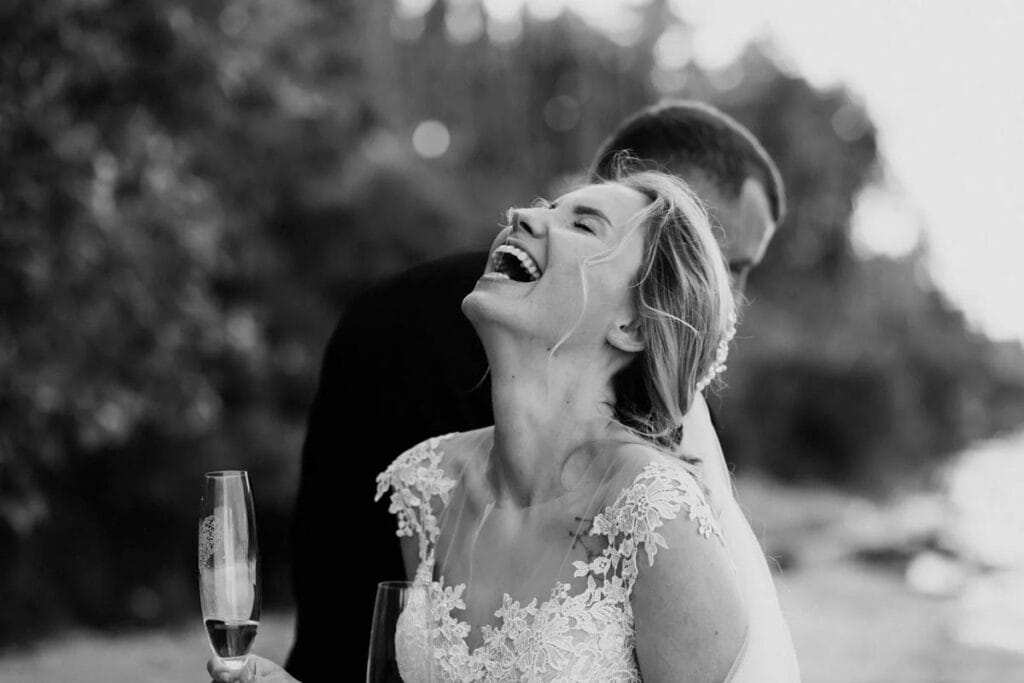
Why I Never Edit Out Happy Tears or Messy Hair (and Why You Shouldn’t Want Me To)
Every time I deliver a wedding gallery, at least one couple asks the same question:
“Can you remove the tear streaks / the wind-blown hair / the red cheeks?”
My answer is always gentle, but firm: No. I won’t. And here’s why — and why you actually don’t want me to.
1. Happy Tears Are Proof of the Day Being Real
When I see mascara running down a bride’s cheek or a groom blinking hard to hold back tears during vows, I don’t reach for the healing brush. I celebrate it.
Because those streaks are evidence. They prove the day was bigger than anyone could prepare for. They show that the vows hit home, that the love was overwhelming, that the moment was too powerful to stay dry-eyed.
If I erase them, I erase the truth of what happened. And the truth is what makes the photo worth keeping for a lifetime.
Couples who once asked me to “clean it up” almost always change their mind when they see the final edit with the tears left in. They say the same thing: “Now I remember how much it hurt — in the best way.”
2. Messy Hair Tells the Story of the Weather, the Wind, the Joy
Wind in Edmonton is not polite. It arrives without warning, especially in spring and fall, and it turns veils into sails and perfectly styled hair into beautiful chaos.
I leave it.
Because that messy strand across your face is proof you were outside, alive, feeling the breeze. It shows the day wasn’t happening in a climate-controlled studio — it was happening in real life, under real sky.
Messy hair from dancing, from running to shelter in the rain, from laughing too hard — all of it is evidence of a day that was felt, not just performed.
When I smooth it all out, the photo becomes generic. When I leave it, the photo becomes yours.
3. “Flaws” Are What Make You Recognizable
In 20 years, your children won’t be looking at the photos to judge how “flawless” you looked. They’ll be looking to recognize you.
The laugh lines that appear when you smile with your whole body. The flushed cheeks when you’re cold and happy at the same time. The way your hair always escapes when you’re excited. The little asymmetries in your smile that only your partner knows.
These are the things that make the people in the photo you. Retouch them away, and future generations see strangers in formal clothes. Leave them in, and they see their mom, their dad, their grandparents — real humans who loved fiercely.
 4. Editing for “Perfection” Dates the Photo Faster Than Any “Flaw”
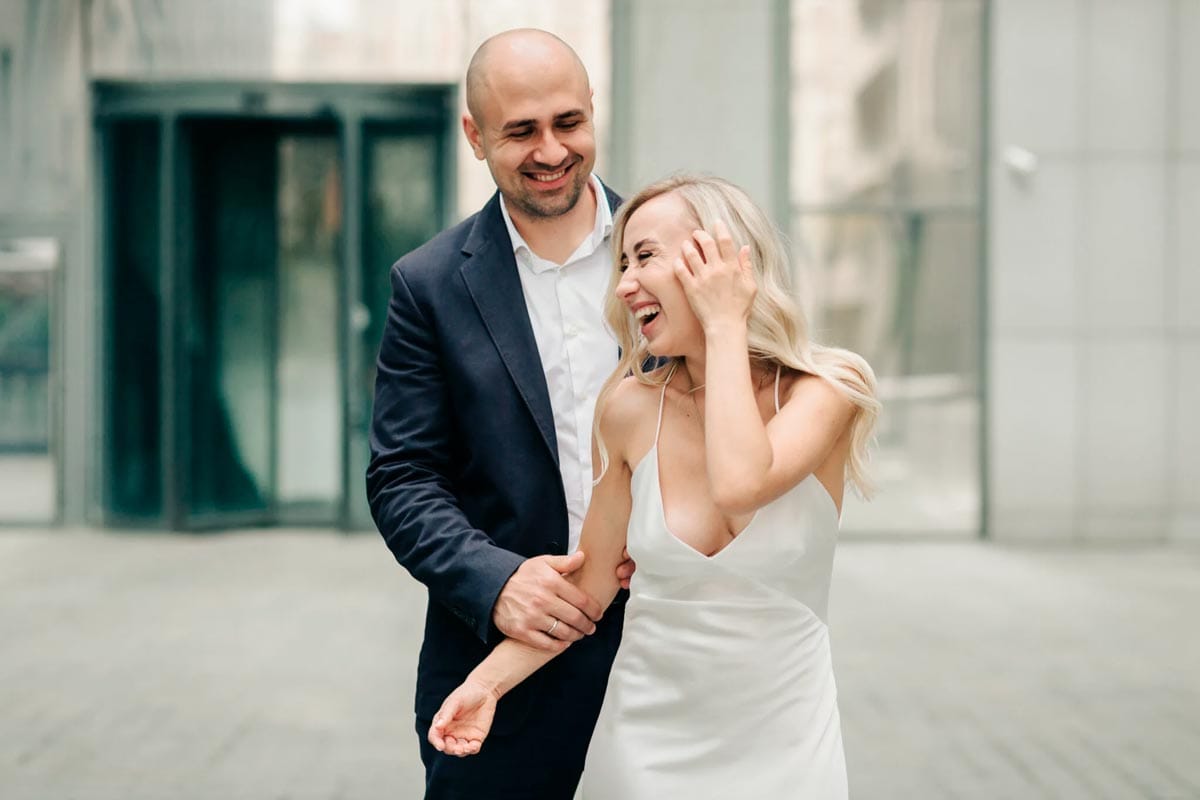 4. Editing for “Perfection” Dates the Photo Faster Than Any “Flaw”
Heavy retouching trends age poorly.
- Over-smoothed skin from 2018 now looks plastic and artificial
- Over-whitened teeth and brightened eyes from 2020 look cartoonish
- Extreme slimming and reshaping from any era looks obviously manipulated
But a photo with visible emotion — tears, windblown hair, flushed skin — never looks “old-fashioned.” It looks human. And human never goes out of style.
5. The Most Treasured Photos Are Never the Most “Perfect” Ones
Look at your parents’ or grandparents’ wedding photos. The ones you love most are rarely the formal portraits. They’re the candid ones:
- Dad laughing so hard his eyes are closed
- Mom with wind in her veil
- A tear on Grandpa’s cheek during the toast
- Grandma’s hands shaking as she lights the unity candle
Those are the photos that feel alive. That’s what I want for you.
My Editing Philosophy in One Sentence
I edit to enhance feeling, not to erase humanity.
Happy tears stay. Wind-messed hair stays. Flushed cheeks stay. Red noses from cold stay. Uneven smiles stay.
Because 30 years from now, you won’t care whether your makeup was flawless. You’ll care whether you can still feel how much you loved each other that day.
And the only way to preserve that feeling is to preserve the truth of it — every tear, every messy strand, every imperfect, beautiful detail.
If you want photographs that will still move you — and your children — decades from now, photographs that carry the real heartbeat of your day, not a polished version of it — I’d be honored to create them for you.

